
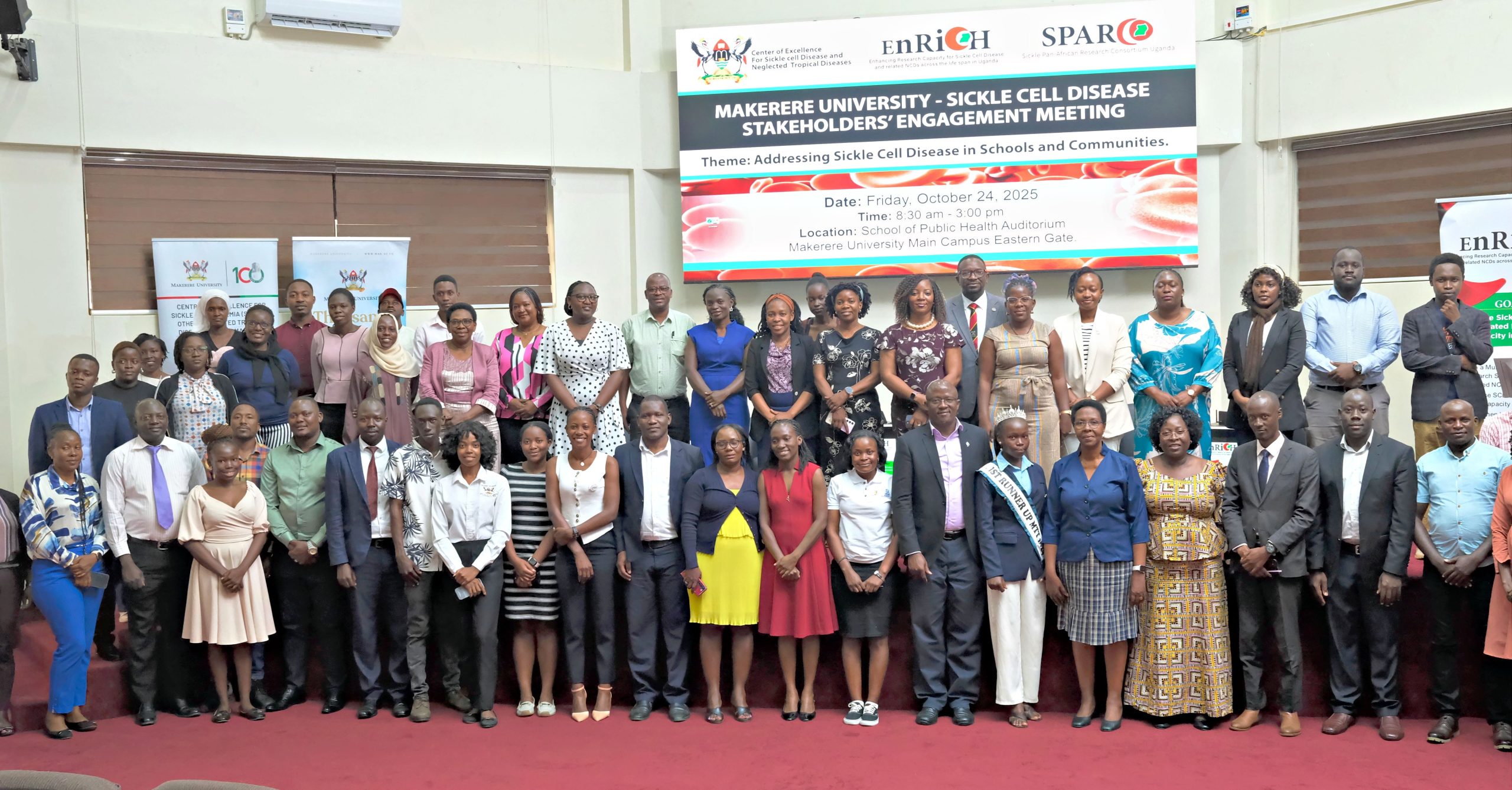
On Friday, 24 October 2025, stakeholders from across the health, education, research, and community sectors gathered at the School of Public Health Auditorium, Makerere University Main Campus (Eastern Gate) for a one-day engagement meeting under the theme:
“Addressing Sickle Cell Disease in Schools and Communities.”
The meeting was convened by Makerere University in collaboration with the Centre of Excellence for Sickle Cell Disease and Neglected Tropical Diseases, EnRiCH, and SPARCO.
A Multi-Sectoral Dialogue for Action
The engagement brought together clinicians, researchers, educators, policymakers, caregivers, civil society actors, and people living with sickle cell disease. The discussions focused on strengthening awareness, improving early detection and management, and enhancing psychosocial support systems within schools and communities.
Participants examined the burden and daily realities faced by individuals living with sickle cell disease, particularly learners navigating academic environments while managing chronic health needs.
Key Highlights
- Expert presentations on recent research findings and best practices in sickle cell care
- Panel discussions exploring school-based support systems, community outreach strategies, and clinical care linkages
- Interactive breakout sessions designed to identify practical, locally applicable solutions
- Networking opportunities aimed at fostering cross-sector collaboration



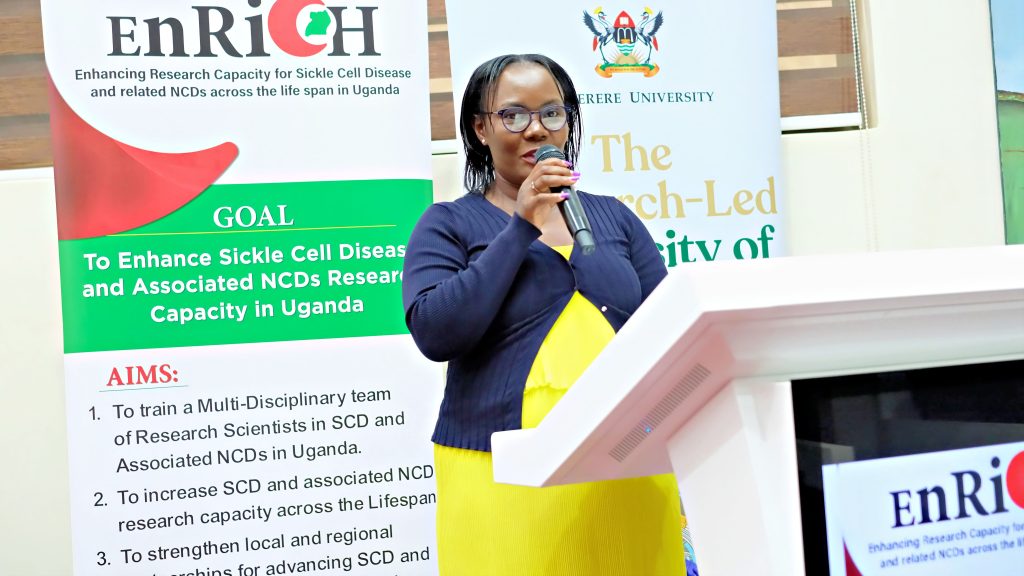

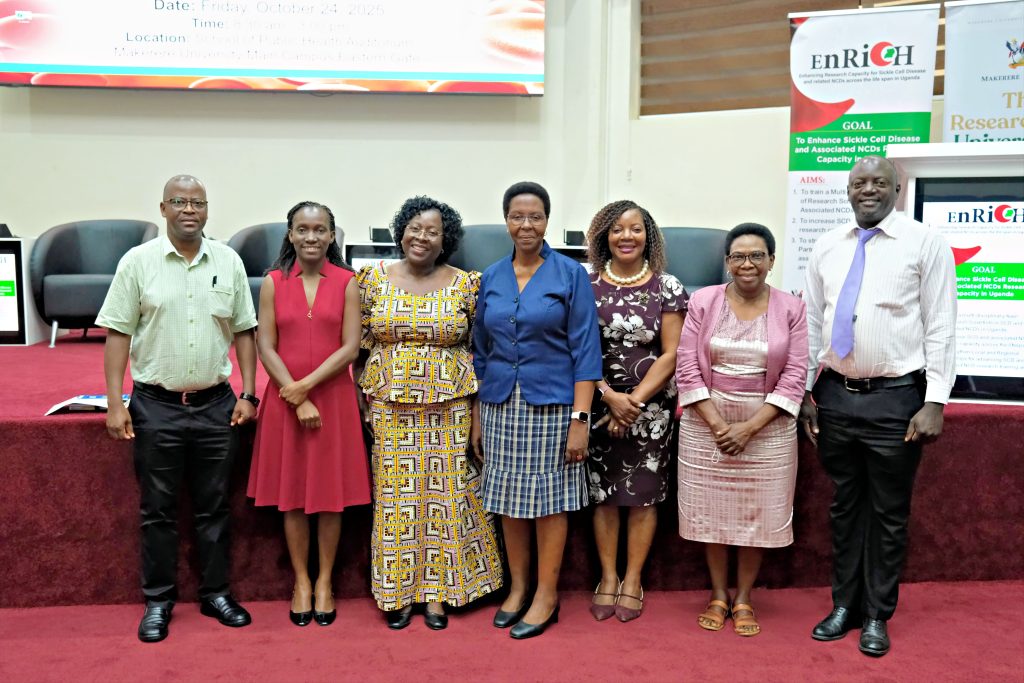
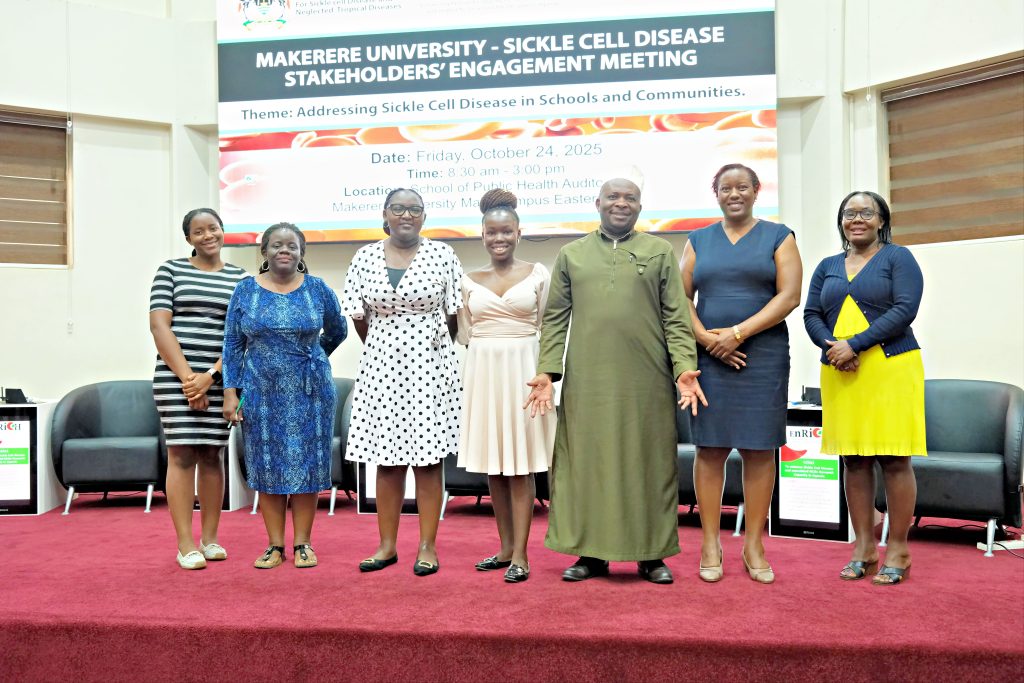
Strengthening Roles and Responsibilities
A central focus of the meeting was defining clear roles for schools, health services, community leaders, and policymakers in improving outcomes for people living with sickle cell disease. Participants emphasized the importance of coordinated action, inclusive policies, and sustained awareness efforts.
Moving Forward
The meeting concluded with a shared commitment to translate discussions into actionable steps. Stakeholders agreed to strengthen partnerships, promote evidence-based interventions, and advocate for supportive environments in schools and communities.
This engagement marks an important step toward building informed, compassionate, and responsive systems that better support individuals and families affected by sickle cell disease.